Lightning Protection System
 Jeyakumar Velusamy
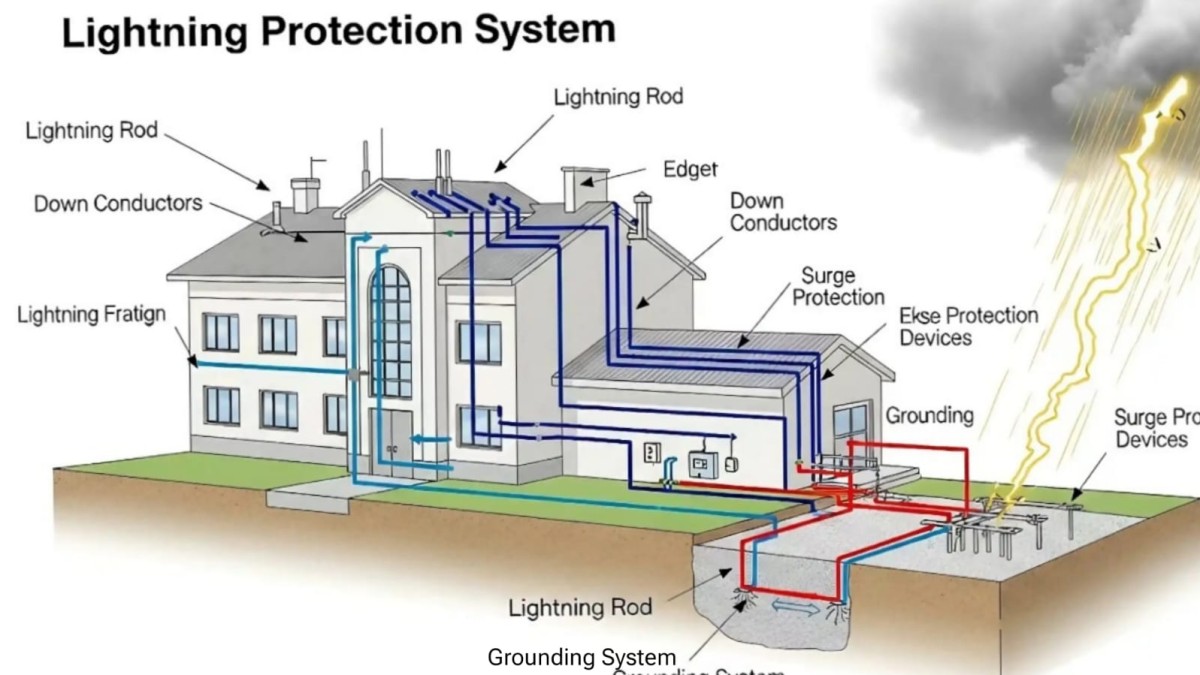
Understand how Lightning Protection Systems safeguard buildings and electrical equipment using air terminals, earthing, down conductors, and SPDs.
Introduction
A Lightning Protection System (LPS) is a specially designed arrangement of components that protects buildings, people and electrical equipment from the destructive effects of lightning strikes. Rather than stopping lightning from forming, an LPS gives lightning a safe, controlled path from the sky, to the building’s rooftop, down to the ground thus minimizing risk of fire, structural damage or electrical surge.
Lightning can be incredibly destructive: when it finds a path through a building, it can cause severe damage from fire and structural harm to destruction of appliances and electronics.
Core Components of Lightning Protection System
An effective LPS typically includes several interlinked parts. Together, they create a low-impedance, safer path for lightning currents and associated surges.
Component | Function |
|---|---|
Air Terminals (Lightning Rods / Air-termination devices) | Installed at the highest points (roof ridges, chimneys, antenna masts) to “intercept” a lightning strike before it hits vulnerable parts of the building. |
Down Conductors | Conduct heavy lightning current from air terminals down the structure to the ground forming a controlled path for discharge. |
Grounding (Earth Electrode System) | Dissipates the lightning current safely into the earth. Good grounding involves proper depth, spacing and material to keep resistance low. |
Equipotential Bonding | All metallic parts of the building (pipes, structural metal, electrical grounding, metallic roofs/pipes) are interconnected so they share the same electrical potential — preventing dangerous side-flashes or voltage differences. |
Surge Protection Devices (SPDs)/Lightning Arresters | Installed at electrical / data / communication entry points to stop voltage spikes or surges caused by direct or nearby lightning — protecting sensitive equipment. |
The Journey of a Lightning Strike (Safely Handled)
-
When lightning strikes, its path tends to go to the highest point a roof, antenna, chimney or a conductive structure. In a building protected by an LPS, the air terminal becomes that “highest, preferential point.”
-
Strike hits the air terminal → current travels through down conductors downward.
-
Reaches the grounding electrode / earth system where the immense electrical energy is dissipated harmlessly into the earth, avoiding structural or fire damage.
-
If lightning causes surges on entering electrical/data/communication lines, SPDs/arrester devices redirect those surges safely to ground before reaching sensitive equipment.
-
Meanwhile, thanks to equipotential bonding, all metallic parts inside or on the building remain at the same potential reducing risk of side-arcs between conductive parts during a strike.
Why This Is Especially Important for India / Storm-Prone Regions
In regions with frequent thunderstorms and monsoon-driven lightning, the risk of lightning-related damage is significantly higher. As buildings get taller, and use more electronics (power systems, communication, solar inverters, sensitive equipment), the impact of a lightning strike becomes more severe.
An effective Lightning Protection System:
-
Protects human life and safety.
-
Prevents structural damage, fires, short-circuits.
-
Protects expensive electrical & electronic equipment.
-
Ensures continuity of electrical services and operations.
For industrial facilities, commercial buildings or homes investing in power or renewable-energy systems (e.g. inverters, solar installations), the LPS becomes a critical safeguard a cornerstone of electrical safety and building resilience.
Closing Thoughts
A well-designed and properly installed Lightning Protection System is more than a “nice-to-have.” It’s a strategic investment one that safeguards lives, property, and equipment from one of nature’s most unpredictable and destructive forces.
If you’re designing, building or retrofitting a structure especially in areas with heavy thunderstorms or reliance on electrical/electronic systems LPS should be part of your plan from day one.