Step & Touch Voltage in Substations: Complete Guide for Engineers
 Jeyakumar Velusamy
Learn Step & Touch Voltage in substations with simple explanations, real examples & safety design methods every electrical engineer must know.
Introduction
If you are an electrical engineering student or working professional, you’ve probably heard about Step and Touch Voltage — but many still struggle to understand it practically. This concept is critical in substation design, especially for safety and grounding systems. In this blog, we’ll break it down in a simple, practical way so you can actually apply it in real projects.
 - Copy69db67f2889b9_lg.png)
What is Step Voltage?
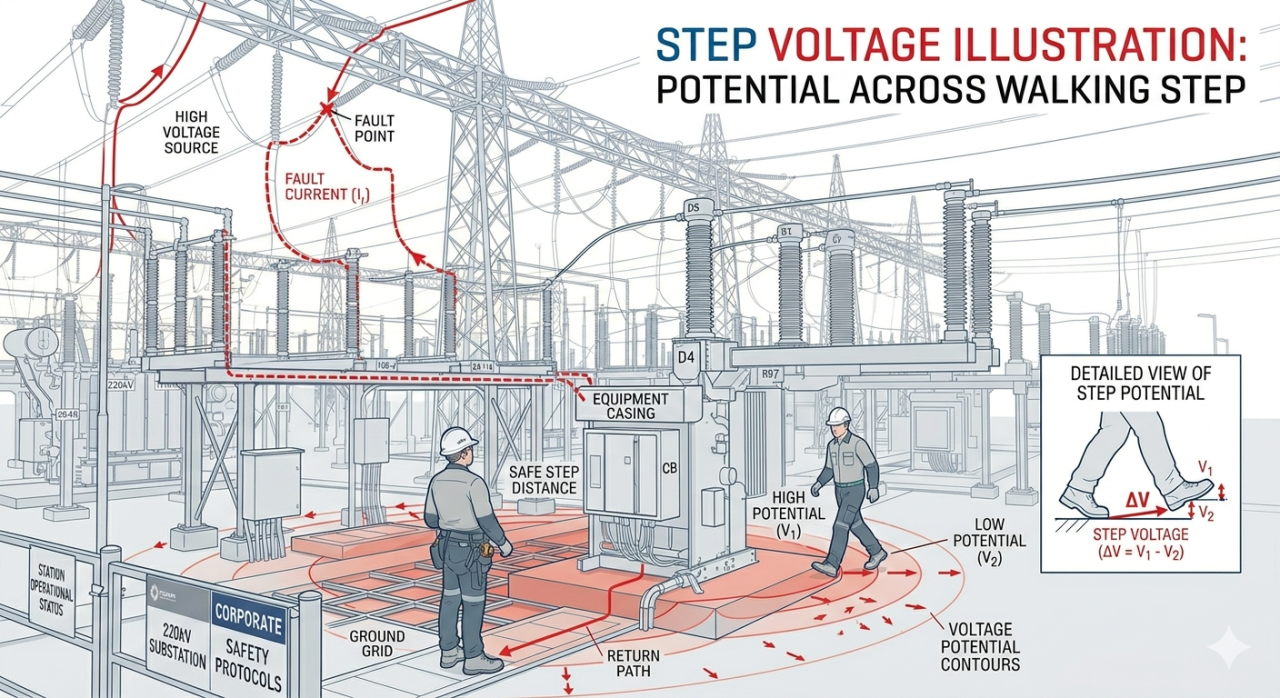
Step Voltage is the voltage difference between two points on the ground that are one step apart (typically 1 meter). When a fault occurs, such as lightning or a short circuit, current flows into the earth and creates a voltage gradient on the soil surface. If a person walks across this area, one foot may be at a higher potential while the other is at a lower potential. This voltage difference can cause current to pass through the body, making it a serious safety concern.
What is Touch Voltage?
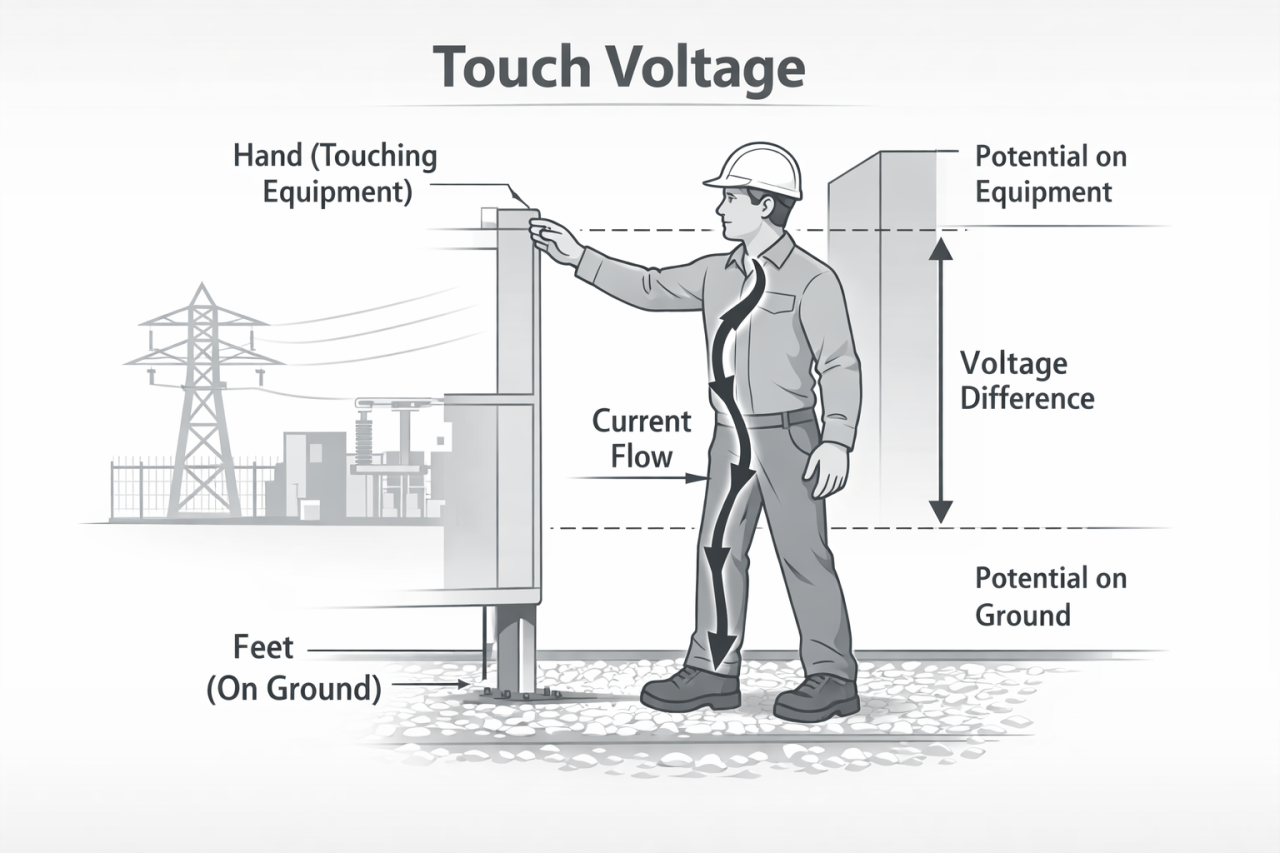
Touch Voltage occurs when a person touches a grounded structure, such as equipment or a fence, while standing on the ground. In this situation, a voltage difference exists between the hand (in contact with the equipment) and the feet (in contact with the ground). This condition is more dangerous than step voltage because the current flows through the chest region, increasing the risk of severe injury or fatality.
Why Step & Touch Voltage is Dangerous?
During a fault condition, a large amount of current enters the ground, causing the voltage in the earthing system to rise. This can lead to electric shock, severe injury, or even fatal accidents. Because of these risks, proper earthing design is mandatory in substations to ensure safety for both personnel and equipment.
How Engineers Reduce Step & Touch Voltage?
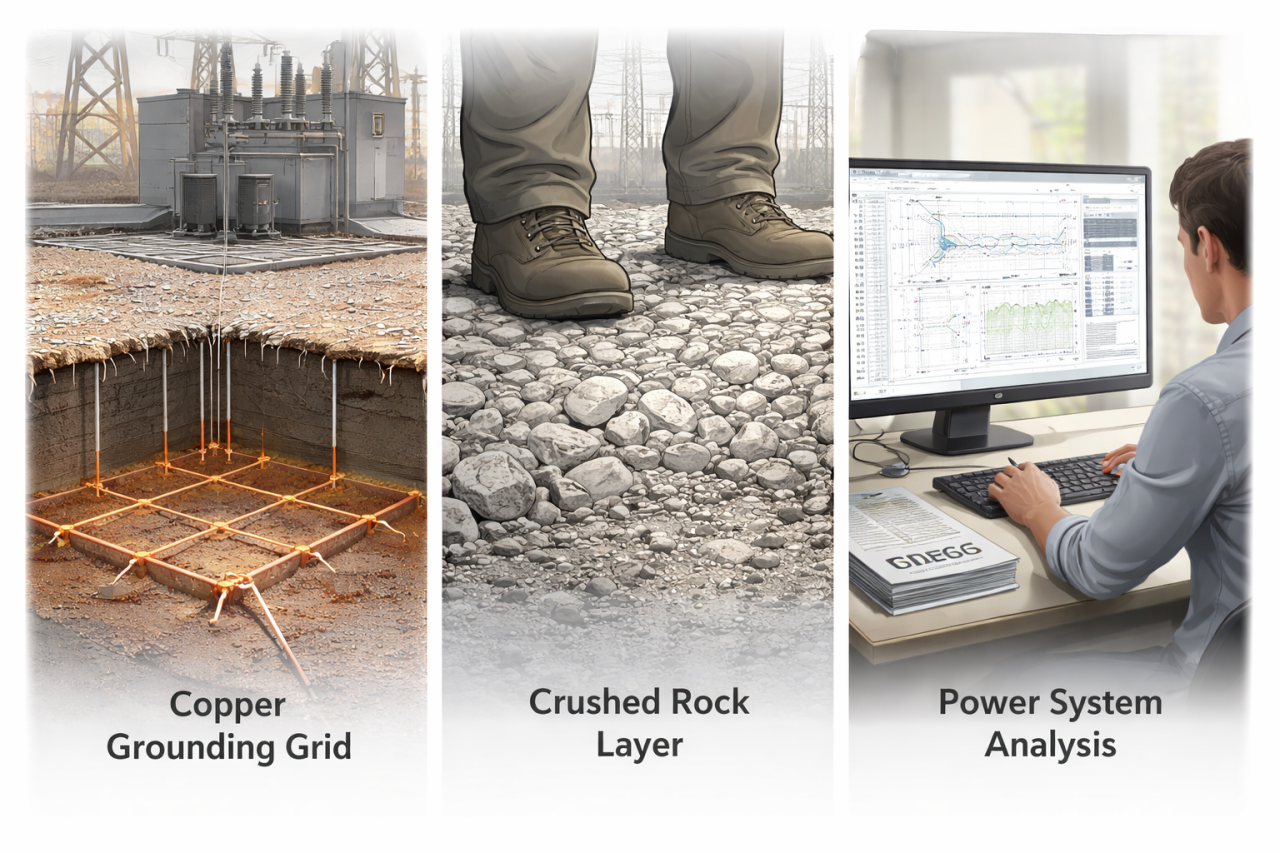
In real-world substation projects, engineers use multiple techniques to reduce step and touch voltage. One of the primary methods is ground grid design, where a mesh of conductors is buried under the substation. This helps reduce voltage differences and safely distributes fault current. Another important method is the use of a gravel layer or crushed rock on the surface, which increases surface resistance and reduces the current flowing through the human body.
Engineers also perform proper earthing calculations using tools like ETAP, CDEGS, and AutoCAD to determine parameters such as grid resistance, step voltage, and touch voltage. Additionally, equipotential bonding is implemented by connecting all metallic parts, which helps eliminate dangerous voltage differences within the substation.
Real-World Example
Consider a 220kV substation experiencing a fault condition. Fault current flows into the earth, and voltage spreads across the ground surface. If the grounding system is poor, even walking near the area can be dangerous due to potential differences. However, if the system is properly designed, the voltage levels remain within safe limits, ensuring the safety of personnel.
Why This Matters for Your Career
If you are aiming to become a Substation Design Engineer or an Electrical Design Engineer, this topic is extremely important and is often asked in interviews. Companies expect candidates to have a practical understanding rather than just theoretical knowledge. While most students tend to memorize definitions, top engineers focus on understanding real-world behavior and calculations, which gives them a significant advantage.
Conclusion
Step and Touch Voltage are not just theoretical concepts; they are life-saving design parameters in substations. Understanding them properly can make you job-ready, improve your technical confidence, and help you stand out in interviews.
Categories: : Cable Sizing, cables, Calculations, Career Growth, Earthing Design, Electrical Design & Engineering, Electrical Masterclass, IEC Standards, Power System Analysis, Professional Development